Every claim needs the right kind of observation
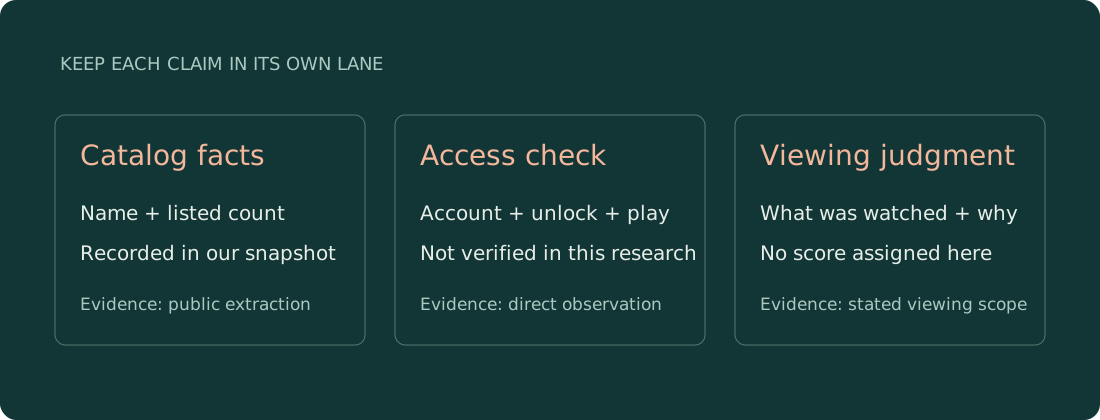
We use three separate forms of evidence. A catalog field describes a listing. A direct access observation describes what happened in a stated account and device context. A viewing opinion describes material actually watched. Moving from one form to another requires another check.
At launch, our GoLove coverage reaches the first form only: six title/count pairs from a public text extraction. We have not watched these series for review. The journal therefore publishes a catalog verdict, practical selection tools and questions to verify, without star scores or plot judgments.
Our working labels
| Label | Meaning here | What it cannot mean |
|---|---|---|
| Recorded | A field appeared in the dated source extraction. | We played or independently tested the content. |
| Unverified | Our available research does not answer the question. | The feature is absent, broken or unavailable. |
| Your note | A personal record saved by your browser. | An editorial claim or shared user review. |
A worked example
My AI Girlfriend has seven listed episodes in our reference. That sentence is within the evidence. Calling it a seven-part completed season would require a completion statement. Calling it easy to watch would require an actual access check. Calling it worth paying for would require both viewing scope and a known price.
We retain the first sentence and leave the other questions visible. That is a narrower verdict, but it tells a reader what can safely be compared today.
What a future access check must record
- The observation date, ordinary public page address and device context.
- Whether the tester was signed out, signed in, or using a paid account.
- The exact action taken and the visible result, including a login or unlock boundary.
- Anything that was not tested, including further episodes, payment or other regions.
One successful preview would remain a preview observation. We would not turn it into an “all episodes included” claim. An interrupted attempt would need its own description rather than a negative score.
Opinion needs a stated scope
Before publishing an evaluative review, we would disclose which material was viewed and how the judgment was formed. A specific observation is more useful than a detached number. We will not generate a numerical rating from episode count, attractive artwork or a title’s implied premise.
Dates, revisions and corrections
Our current product facts were recorded on 21 October 2026. Page dates describe this journal’s work, not a platform release. A future change should identify the new observation and replace the affected field. Old personal notes remain yours and should be rechecked before you act on them.
To report a factual error, use the contact page and include the journal page, the disputed field and a public source or a description of the visible screen. Never send login details, payment credentials or private material.
Commercial relationships
Some buttons are affiliate routes. A qualifying action may earn us a commission. Our disclosure explains that relationship; it does not turn an untested product claim into a verified one. We keep unknown fields visible beside the commercial choice.